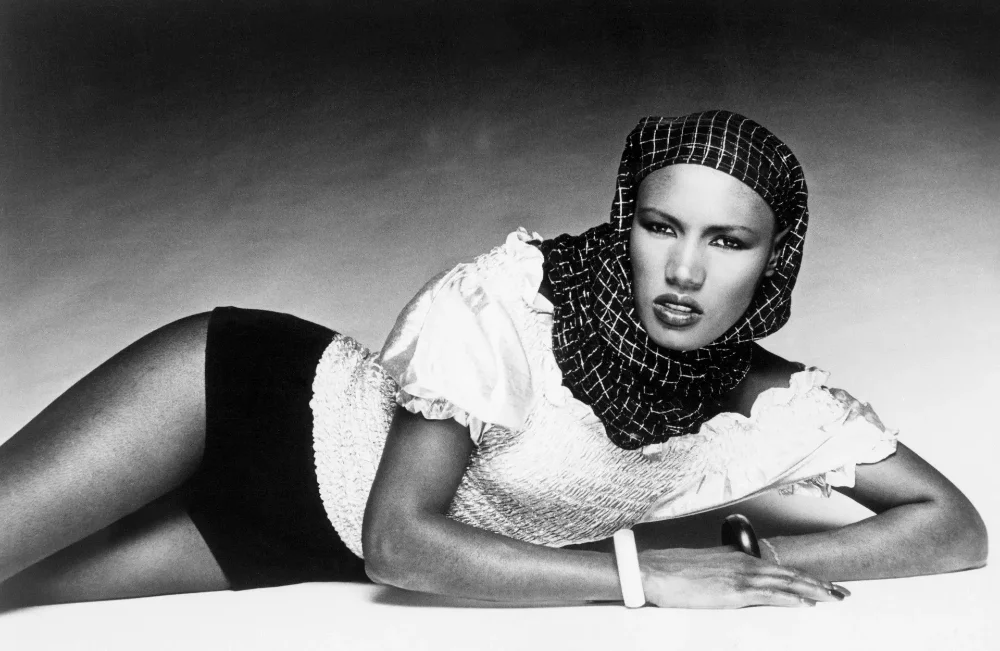
Some stars shine brightly, but others forever alter the night sky. Grace Jones belongs to the latter. If one were to look for the definition of the word “icon,” her portrait—with its razor-sharp features and unmistakable androgynous style—would be the very first entry. Grace is not just a singer or an actress; she is a living work of art that has fascinated global pop culture for decades.
From Jamaica to the Runways of Paris and NYC
Born in Jamaica, Grace’s journey to world fame began in New York and later Paris. In the 1970s, as the fashion world craved something bold and subversive, she stormed the scene with her towering stature and striking presence. A regular at the legendary Studio 54, she collaborated with giants like Issey Miyake and Thierry Mugler, becoming the ultimate muse for photographer Jean-Paul Goude. Their creative partnership produced some of the most influential imagery in history, continuing to inspire stars like Rihanna and Lady Gaga today.
A Musical Revolution: Beyond Disco
While she emerged during the disco era, Grace Jones refused to be pigeonholed. Her transition to a New Wave and reggae-infused sound at the famous Compass Point Studios in the Bahamas resulted in albums that changed the musical landscape forever.
Her biggest and most recognizable hits include:
- Slave to the Rhythm – A hypnotic track widely considered a production masterpiece.
- Pull Up to the Bumper – A funk-heavy club anthem with provocative lyrics that dominated dance floors.
- Libertango (I’ve Seen That Face Before) – An atmospheric blend of tango and modern synth-pop.
- Nightclubbing – The title track of the album that defined her “ultra-cool” aesthetic.
On the Silver Screen: The Unforgettable Villain
Grace Jones truly made her mark on Hollywood in 1985 when she starred in the James Bond franchise. Playing the character May Day in A View to a Kill alongside Roger Moore, she broke every “Bond girl” stereotype. She wasn’t a damsel in distress; she was a dangerous, physically formidable, and visually stunning powerhouse who arguably stole every scene she was in.

Beyond Bond, she also starred alongside Arnold Schwarzenegger in Conan the Destroyer as the fierce warrior Zula, further cementing her status as a woman no one would dare overlook.
A Legacy That Never Fades
Grace Jones teaches us that authenticity is the strongest currency. Whether it’s her avant-garde costumes, her deep contralto voice, or her uncompromising attitude, she remains as relevant as ever in 2026. She is living proof that pop culture isn’t just about following trends—it’s about having the courage to be different.