If My Octopus Teacher left you a little undone – sitting on the couch, slightly teary, convinced the ocean is full of magic – we have good news. The director behind that Academy Award-winning documentary is back. This time, she’s left the water behind for the dry heat of the South African bush. And yes, you’ll want tissues again.
Pangolin: Kulu’s Journey is now streaming on Netflix. It’s the story of a baby pangolin rescued from wildlife traffickers, a man who had never cared for a wild animal in his life, and the months they spent learning to trust each other – one slow, careful step at a time.
What Is a Pangolin, Exactly?
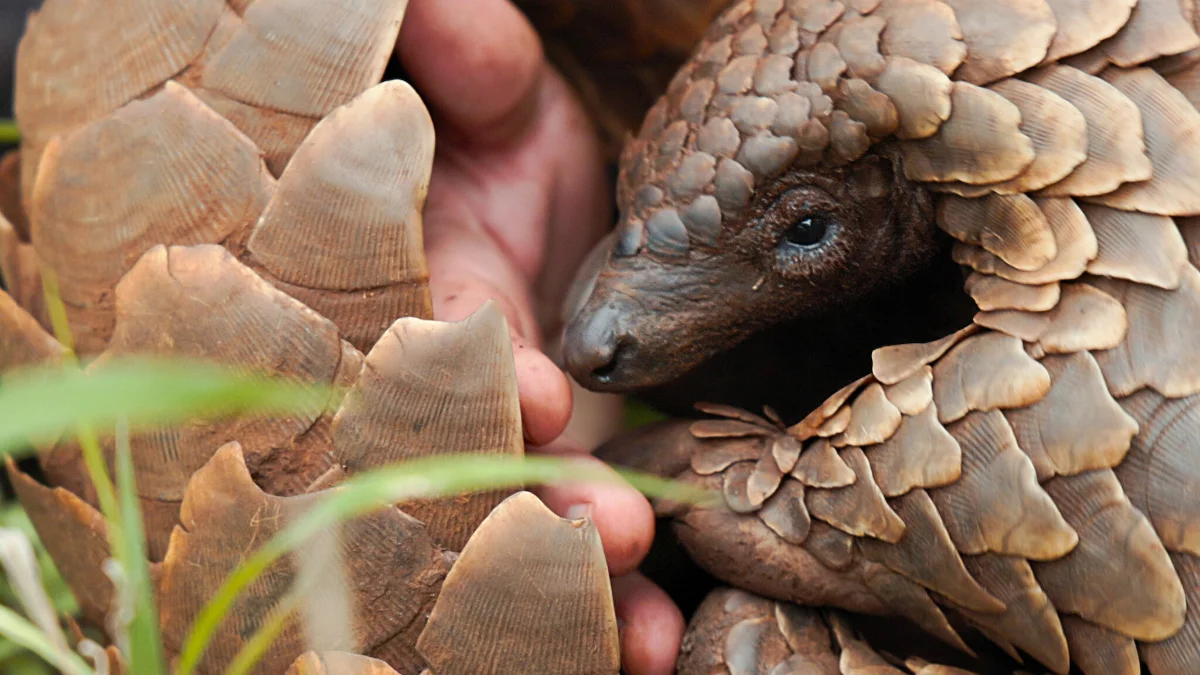
The pangolin is one of the world’s most unusual mammals. Picture a creature the size of a house cat, covered head to tail in overlapping keratin scales, armed with a long sticky tongue built for raiding ant colonies, and — when threatened — capable of rolling itself into a near-perfect armored ball.
That last defense mechanism works beautifully against natural predators. Against poachers? It makes the pangolin tragically easy to pick up and carry away.
Pangolins are the most illegally trafficked mammal on the planet. Their scales are in high demand across parts of Asia for use in traditional medicine, fetching staggering prices on the black market. The result: multiple species pushed to the edge of extinction.
What Is Pangolin: Kulu’s Journey About?
The story begins in Johannesburg, where a sting operation intercepts wildlife traffickers and rescues a three-month-old pangolin pup taken from his mother far too soon.
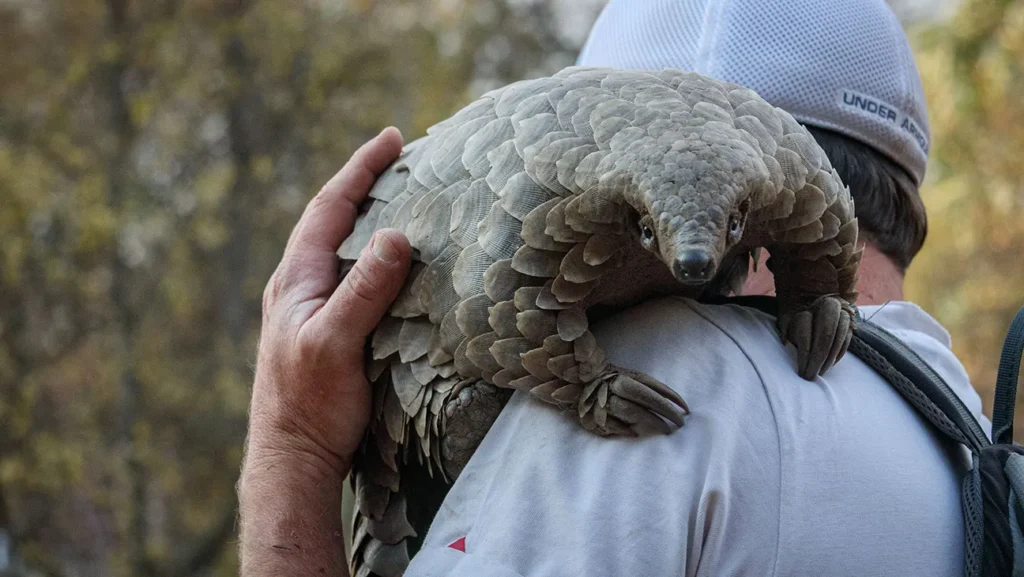
The pup is initially named Gijima, Zulu for “run,” which turns out to be an extremely accurate description of his primary coping strategy. Care of the animal falls to Gareth Thomas, a South African investment manager with no wildlife rehabilitation experience and a quietly restless sense that his life needed more meaning.
What follows is nearly 90 minutes of something genuinely rare: a nature documentary that is as much about a person as it is about an animal. Gareth spends months on a private reserve with the pangolin, now renamed Kulu – short for kulula, the Zulu word for “easy” (an optimistic choice, given the circumstances). He walks with him at night while he forages for ants. He monitors his weight. He sleeps nearby when he’s distressed. He gives him space, then more space, then a little more.
And slowly, improbably, it works.
Pippa Ehrlich: The Director Who Knows How to Tell These Stories
Pangolin: Kulu’s Journey is directed by Pippa Ehrlich, the Academy Award-winning filmmaker behind My Octopus Teacher (2020) — the documentary about a diver who spent a year visiting the same wild octopus in a South African kelp forest, and came away transformed.
Ehrlich has a distinct gift: she doesn’t treat nature documentaries as biology lessons. She treats them as human stories that happen to involve extraordinary animals. The science is there. The conservation urgency is there. But what drives her films is something quieter — the question of what happens to a person when they let themselves be fully present with another living creature.
The cinematography in Kulu’s Journey is stunning. Close-up footage of the pangolin foraging, burrowing, and tentatively exploring the reserve at night feels intimate rather than intrusive. It’s the kind of filmmaking that makes you forget you’re watching a documentary at all.
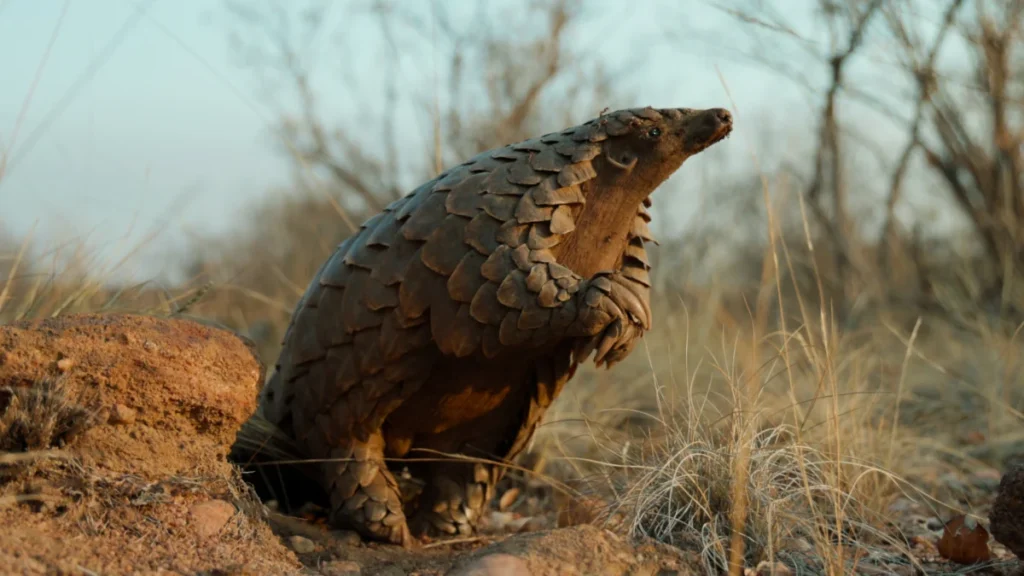
As Ehrlich herself said about the film for Discover Wildlife: “This film tells a story of love, trust, and understanding that I believe will resonate deeply with everyone who watches. Pangolins are such remarkable creatures — gentle and shy, with their own special charm.”
What Are Critics and Audiences Saying?
The response has been warm across the board. The film holds a 7.5/10 on IMDb, and reviewers from the Hollywood Reporter, the New York Times, and the Financial Times have highlighted its visual quality and the authenticity of the bond between Gareth and Kulu.
The overwhelming consensus, especially among general audiences, is that Kulu’s Journey delivers exactly what it promises: a moving, beautifully shot story about an animal most people have never thought about, and the human who gave a year of his life to save one.
Alexis Kriel, co-chair of the African Pangolin Working Group, put it well: “This is a level of public awareness that has the potential to spark a tide of conversations and a public will to change the outcome for this animal.”
Where to Watch Pangolin: Kulu’s Journey
Pangolin: Kulu’s Journey is streaming now on Netflix. Runtime is 90 minutes.
If you loved My Octopus Teacher, or you’re a fan of nature documentaries in the tradition of BBC Earth or National Geographic, this is your next evening on the couch.
Sources: Netflix, Wikipedia, Netflix Tudum, African Pangolin Working Group, Discover Wildlife, The Hollywood Reporter