Before the elaborate gadgets, blockbuster action sequences and international stars who would eventually play 007, there was Dr. No. Released in 1962, the first official James Bond movie introduced Sean Connery as the sophisticated British secret agent created by author Ian Fleming. Set against the tropical scenery of Jamaica, the film established many of the elements that would define the franchise, from memorable villains and glamorous leading women to one of the most recognizable musical themes in movie history.
James Bond’s First Mission Takes Him to Jamaica
In Dr. No, British intelligence agent James Bond travels to Jamaica to investigate the disappearance and murder of fellow agent John Strangways. His investigation eventually leads to Crab Key, a mysterious private island controlled by the scientist Dr. No.
Along the way, Bond joins forces with CIA operative Felix Leiter, played by Jack Lord, and local fisherman Quarrel, portrayed by John Kitzmiller. Together, they uncover a dangerous plot targeting the American space program.
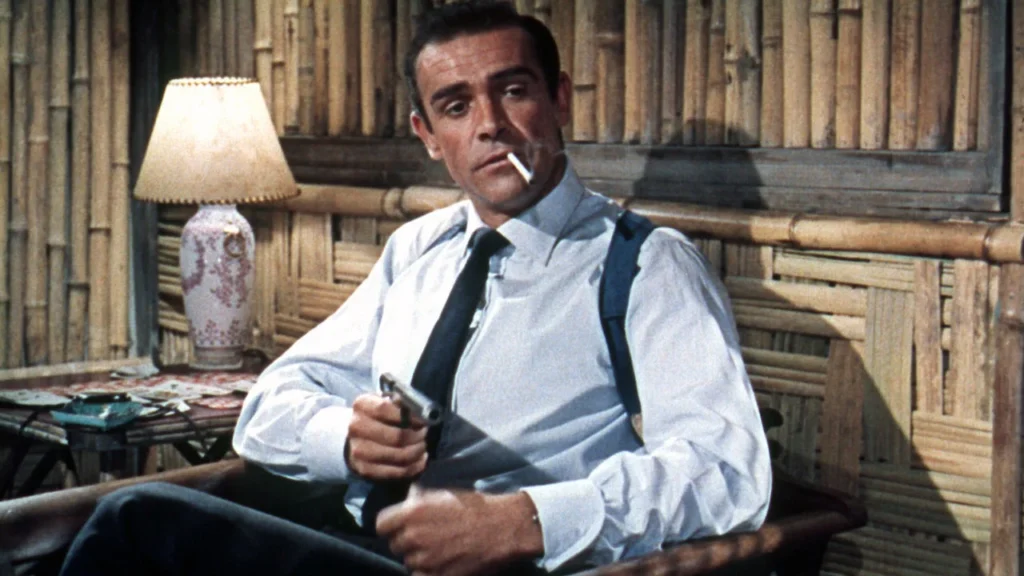
Directed by Terence Young and adapted from Ian Fleming’s 1958 novel, the movie introduced a Bond who was confident, resourceful and occasionally ruthless. Sean Connery brought a distinctive combination of elegance and physical intensity to the character, establishing the screen persona audiences would recognize for decades.
Dr. No: The Villain Who Started a Tradition
The movie’s principal villain is Dr. Julius No, played by American actor Joseph Wiseman.
A brilliant scientist associated with the criminal organization SPECTRE, Dr. No operates from a sophisticated island headquarters, where he plans to interfere with American rocket launches using powerful radio technology.
One of his most distinctive features is his pair of mechanical hands, which replace those lost through radiation exposure. His calculated personality, futuristic headquarters and ambitious plans helped establish the formula for the larger-than-life villains of later Bond movies.
Dr. No also marked the first appearance of SPECTRE in the film series, introducing an organization that would become one of Bond’s most persistent enemies.
Ursula Andress as Honey Ryder: The Original Iconic Bond Girl
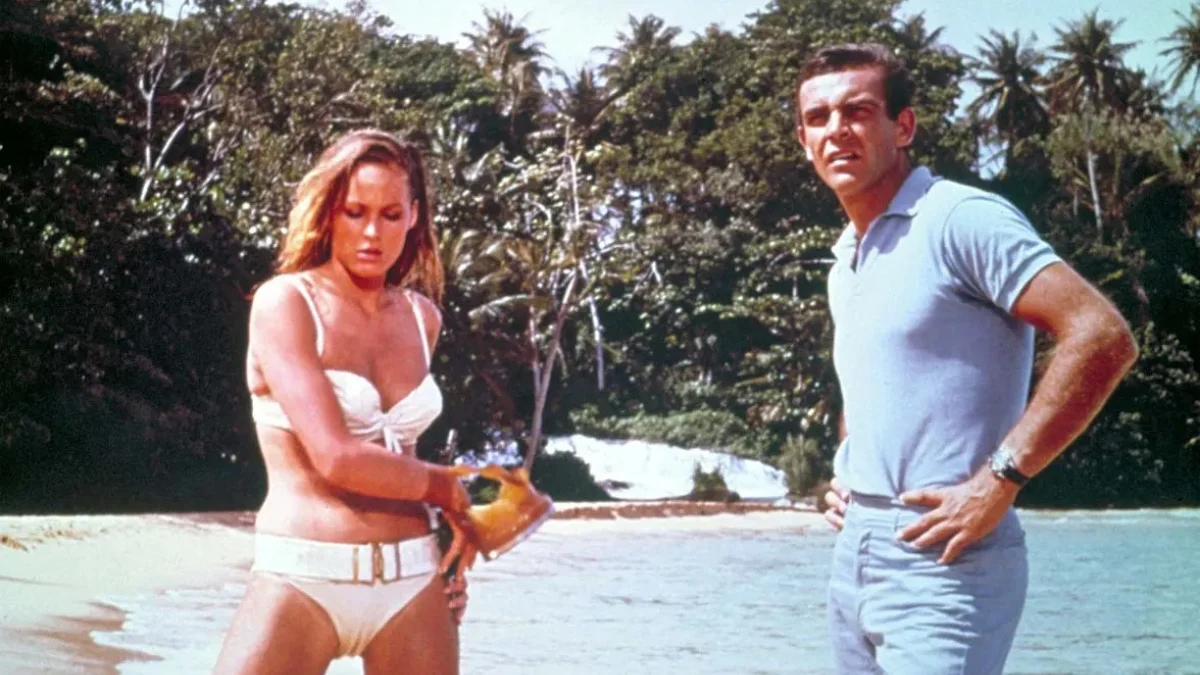
Swiss actress Ursula Andress plays Honey Ryder, a young woman Bond encounters while exploring Crab Key.
Her introduction, emerging from the Caribbean Sea in a white bikini while carrying seashells, became one of the franchise’s most celebrated images. The moment helped make Andress an international star and established a visual reference that future Bond films would revisit.
Honey Ryder is more than a glamorous presence. An independent woman who collects and sells seashells, she becomes directly involved in Bond’s dangerous investigation.
One lesser-known detail concerns Andress’s voice. Her dialogue in the original English-language release was dubbed by voice actress Nikki van der Zyl, whose work helped shape several female characters in the early Bond films.
Another memorable woman in Dr. No is Sylvia Trench, played by Eunice Gayson. During their first encounter at a London casino, Bond delivers the introduction that would become inseparable from the character: “Bond. James Bond.” Watch the legendary scene below.
The Music of Dr. No: The Birth of the James Bond Theme
Few pieces of movie music are as instantly recognizable as the James Bond Theme.
The composition is credited to Monty Norman, while John Barry created the distinctive arrangement and recorded it with his orchestra. Its electric guitar riff, brass instrumentation and driving rhythm became central to the sound of the franchise.
Barry would subsequently compose scores for numerous Bond films, helping develop the sophisticated orchestral style associated with 007.
Dr. No also features Underneath the Mango Tree, a Caribbean-inspired song written by Norman. Bond and Honey Ryder sing parts of the tune during their first encounter, offering a playful musical moment amid the suspense.
Another featured recording is Jump Up, performed by Jamaican band Byron Lee and the Dragonaires.
Unlike later installments, Dr. No does not feature a major standalone pop theme song performed by an international recording star. That tradition would develop as the series expanded.
Behind the Scenes: Interesting Facts About Dr. No
Production began in Jamaica on January 16, 1962, with location filming around Ocho Rios and additional studio work at Pinewood Studios in England.
Several details from the production offer a fascinating look at how the James Bond phenomenon began.
- Sean Connery was not the only actor considered. Producers explored established names, including Cary Grant, before casting the relatively unknown Scottish actor.
- Director Terence Young helped define Bond’s image. Young introduced Connery to the refined clothing, dining habits and social mannerisms that became part of 007’s personality.
- Honey Ryder’s famous beach scene was filmed in Jamaica. Laughing Waters Beach, near Ocho Rios, provided the setting for Ursula Andress’s memorable entrance.
- Connery did not appear in the original gun-barrel opening. Stuntman Bob Simmons performed the silhouette of Bond turning and firing toward the camera.
- A stolen painting became a movie joke. Inside Dr. No’s headquarters, Bond notices Francisco Goya’s portrait of the Duke of Wellington, a painting that had actually been stolen from London’s National Gallery in 1961.
Produced for approximately $1 million, Dr. No became a major commercial success and secured the future of the franchise.
Why Dr. No Still Matters More Than 60 Years Later
Although subsequent Bond movies would feature increasingly elaborate action sequences and technology, Dr. No established the franchise’s fundamental identity.
Its combination of international espionage, exotic locations, distinctive villains, glamorous supporting characters and memorable music influenced the many adventures that followed.
Connery went on to play Bond in five additional official entries, concluding his original run with Diamonds Are Forever in 1971. He returned once more in the independently produced Never Say Never Again in 1983.
More than six decades after its premiere, Dr. No remains an essential starting point for understanding James Bond on screen. It introduced not only one of cinema’s most recognizable characters but also the style and storytelling traditions that continue to shape the series.
Sources: James Bond 007 – When Bond Met Honey, 007 Magazine – Dr. No (1962), 007 Magazine – História úvodnej sekvencie Gun Barrel